Cross-country grip wax explained: colours, temperatures and when klister beats hard wax
Grip wax runs from hard and cold to soft and warm; klister is for coarse, icy or wet old snow. A plain-English guide to Nordic wax classes.
Grip (kick) wax for classic cross-country skis is colour-coded from hard to soft: the colder the snow, the harder the wax. Green and blue are for cold snow, violet for around freezing, and red or yellow for wet snow just above zero. That colour logic only covers new and fine-grained snow, though. When the snow is coarse, refrozen or old and wet, you need klister – a sticky wax in a tube – whatever the thermometer says.
This guide explains the system in plain English, for visitors to Norway, Sweden and Finland as much as for locals who never quite learned it.
How grip wax works
When you kick, the ski presses down and the snow crystals bite into the wax under your foot. When you glide, the ski's camber lifts that zone off the snow. Store norske leksikon, Norway's national encyclopedia, puts it neatly: wax that is too hard lets the crystals slip out and you lose grip; wax that is too soft lets them sink in too deep, so the ski drags or ices up.
That is why there is no single "best" wax. The right one is just soft enough for today's crystals to bite.
Wax classes by temperature
The table below uses generic classes, not any one brand's chart. Colours vary slightly between makers, so read the range on your tin.
| Typical colour | Class | Approx. snow temperature | Snow |
|---|---|---|---|
| Green / polar | Extra cold hard wax | −10 °C and colder | New, dry, fine |
| Blue | Cold hard wax | About −10 to −2 °C | New or fine-grained |
| Violet | Around-zero hard wax | About −3 to 0 °C | New or fine-grained, moist |
| Red / yellow | Mild hard wax | About 0 to +3 °C | Falling or wet new snow |
| Blue klister | Ice klister | About 0 down to −12 °C | Ice, crust, glazed tracks |
| Violet / universal klister | Universal klister | About −3 to +3 °C | Coarse, transformed snow |
| Red / silver klister | Wet klister | About +1 °C and warmer | Old wet snow, slush |
Swix's own wax manual stresses that the number on the box is only a starting point, to be adjusted for snow type, humidity and experience.
Snow type matters more than you think
Swix groups snow into five types: falling or new snow, fine-grained snow, old snow, wet snow and refrozen snow. Sharp new crystals grip a relatively hard wax. As snow ages, thaws and refreezes, the grains turn round and large, like coarse salt, and there is nothing left to bite into hard wax.
That is the job of klister. In its klister article, Swix says plainly that snow type matters more than temperature when choosing between hard wax and klister.
Practical rules
- Fresh snow in the last 24 hours → hard wax, even if it is mild.
- Glazed, icy tracks after a mild day and a cold night → ice klister, even at −5 °C.
- Coarse, granular snow around zero → universal klister.
- Water standing in the track → wet klister.
The classic Nordic Easter trap is klister from yesterday's spring snow meeting five centimetres of fresh snow overnight. The klister ices up. Scrape it off and use hard wax, or cover the klister with a few thin layers of hard wax.
Air or snow temperature?
Swix recommends measuring air temperature in the shade, ideally at several points along the course, and using snow temperature as a supplement. Once snow reaches 0 °C it stays there even when the air warms, so on mild days the air temperature and the moisture in the snow tell you more.
No thermometer? Listen. According to CIMSS at the University of Wisconsin, snow squeaks underfoot when it is colder than about −10 °C, because the crystals are crushed rather than slightly melted. A loud squeak means a cold blue or green wax; silent, soft snow means you are closer to zero.
How many layers, and where?
- Find your kick zone with a paper test. Swix says it typically starts at the heel and runs 65–70 cm forward.
- Sand the zone lightly and apply a thin binder (base wax), warmed in.
- Build 4–10 thin layers, long at first and shorter on top, corking each smooth.
- If torn between two waxes, choose the colder one. You can always add a softer layer on top, but scraping off an iced-up soft wax is much more work.
The Swedish Ski Association's beginner course, Alla kan valla, suggests a starter kit of a green, blue and violet tin plus one universal klister, and advises learning one brand first so you do not get lost in the wax jungle.
Troubleshooting
| What you feel | What it means | Fix on the trail |
|---|---|---|
| Skis slip on uphills | Wax too hard or too thin | Add a layer or a slightly softer wax on top |
| Snow clumps under foot | Wax too soft, or water in the wax | Scrape off, rub a colder wax on top without corking |
| Grip gone after 5 km | No binder | Next time: sand and use base wax |
| Slow glide | Kick zone too long | Redo the paper test |
Fluor-free only
If you plan to enter a citizen race such as the Birkebeiner or Vasaloppet, fluorinated waxes are banned at every level and skis are tested. See our guide for visiting racers.
Smørklar uses exactly these generic classes – extra cold, cold, around zero and mild hard wax, plus ice, universal and wet klister – and suggests one from your snow temperature, air temperature and snow type. Its interface is in Norwegian, Swedish and Finnish.
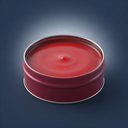
A Nordic wax helper for classic and skate skiers. The app itself is in Norwegian, Swedish and Finnish.
Download on the App StoreFrequently asked questions
What colour grip wax should I use?
Colours differ slightly between brands, but the order is the same: green and blue for cold snow, violet around freezing, red and yellow for wet snow just above zero. Always check the temperature range printed on the tin.
Should I wax for air or snow temperature?
Swix recommends air temperature measured in the shade as the main starting point, with snow temperature as a supplement. Snow cannot be warmer than 0 °C, so on mild days the air tells you how wet it gets.
Sources
- Kick wax techniques — Swix
- Factors influencing ski waxing: snow types and temperatures — Swix
- All you need to know about klister — Swix
- Skismøring — Store norske leksikon
- Why does snow squeak? — CIMSS, University of Wisconsin–Madison
- Alla kan valla – kursmaterial — Svenska Skidförbundet