
Pocket money, kept track of
Each child's balance, chores to approve and a savings goal – shared between both parents.
Download on the App Store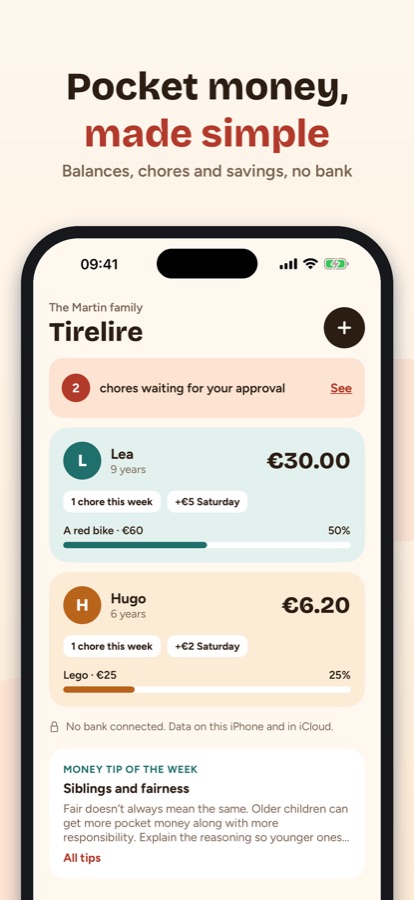
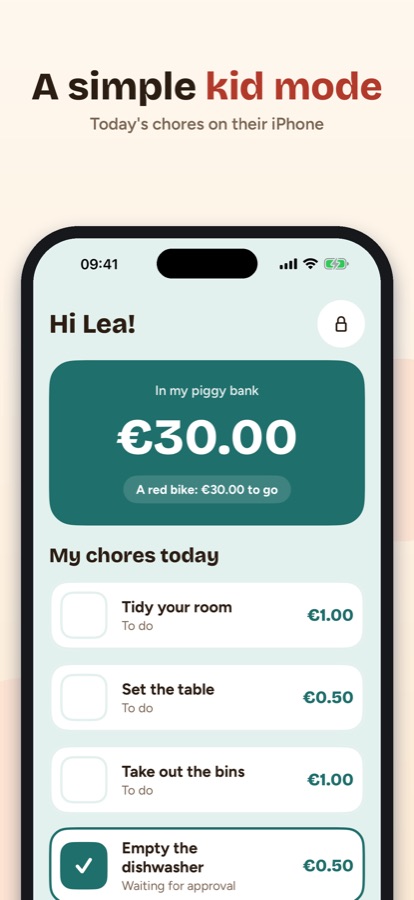
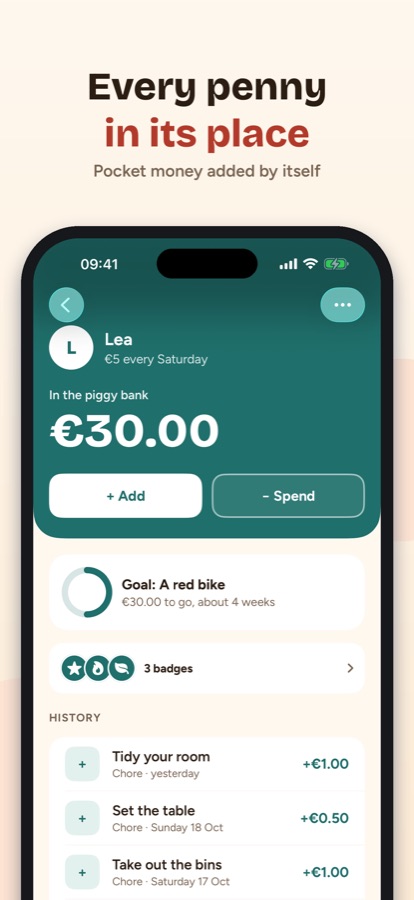
The coins are in the piggy bank, the birthday tenner is in a drawer and nobody remembers whether this week's pocket money was paid. Tirelire keeps the record: a balance per child, pocket money added by itself on the chosen day, and spending noted in two taps.
No bank is linked and no card is ordered. The app suits families who pay in cash or keep the money themselves but want to see what each child really has.
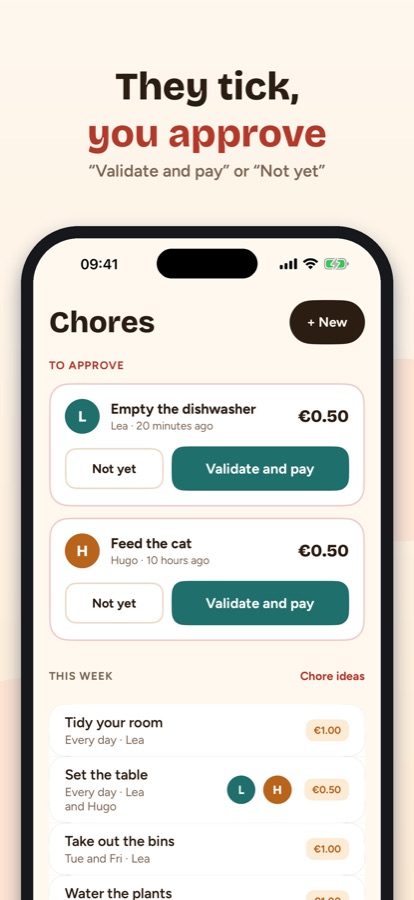
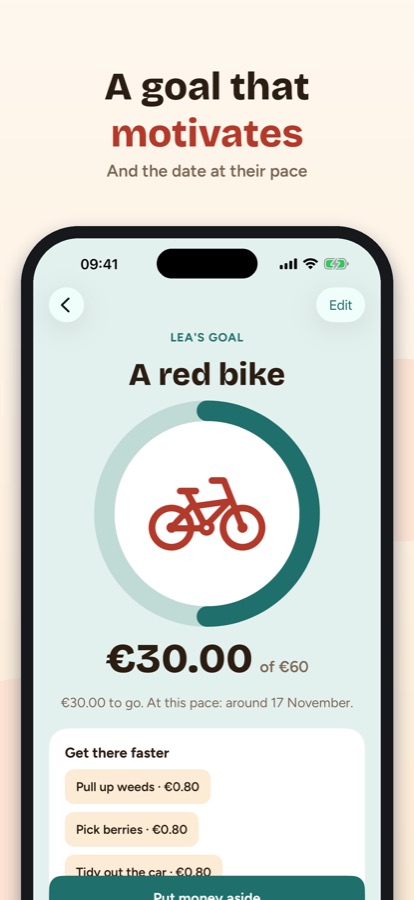
Chores can earn money if you decide so: your child ticks a chore, you approve and pay or answer "Not yet". A savings goal shows what is left and an estimated date at your child's current pace. Data stays on the iPhone and in your own iCloud.
What the app does
A balance for each child
One card per child: balance, this week's chores, next pocket money and savings goal, with the full history.
Automatic pocket money
Set amount and day once; it is added on the day even if the app was closed.
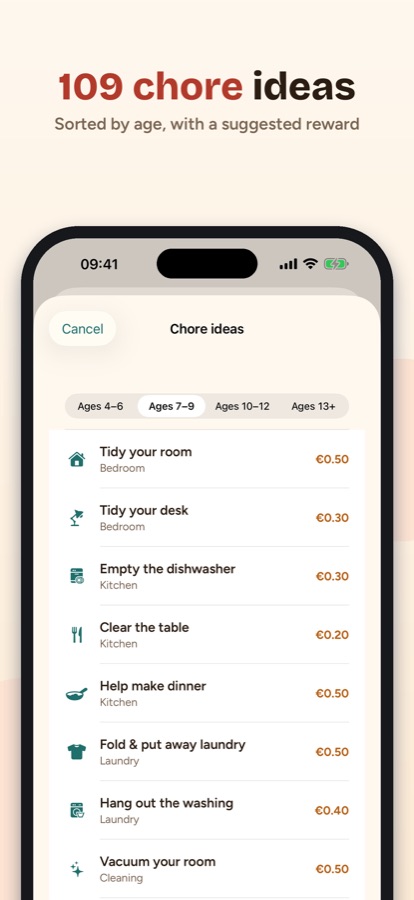
109 chore ideas by age
Grouped 4–6, 7–9, 10–12 and 13+, with a suggested reward; once, daily, some days or weekly.
Parent approval
"Validate and pay" or "Not yet". Half done? Pay half.
Goals, kid mode and sharing
32 goal templates with an estimated date, a kid mode locked with Face ID, and the other parent invited through iCloud sharing.
Articles
Can Children Work in the UK? Ages, Hours and Pay for a First Job (2026)
Part-time work from 14 (13 in some areas), max 12 hours a week in term time, never before 7am or after 7pm. Under-18 minimum wage: £8.00 from April 2026.
Child Trust Fund: How to Find a Lost Account and Whether to Move It to a Junior ISA
Born 1 Sep 2002 to 2 Jan 2011? Your child has a Child Trust Fund. How to trace it, the rules at 16 and 18, and when a Junior ISA switch makes sense.
Age-Appropriate Chores: A Realistic List From Toddlers to Teens
What can a 3, 6, 9, 12 or 15-year-old really do at home? A chore list by age, how to introduce jobs without battles, and which ones UK parents pay for.
What Should Kids Do With Christmas Money? A Simple Plan That Avoids the January Splurge
Split Christmas cash three ways: a treat now, a goal for spring and long-term savings. Plus why grandparents' gifts escape the £100 tax rule.
Do Children Pay Tax on Savings? The £100 Parental Gift Rule Explained
Usually not. But if a parent's gift earns a child over £100 interest a year, the parent may be taxed on all of it. Junior ISAs and grandparents are exempt.
Gaming Scams Targeting Children: Free V-Bucks, Fake Friends and What to Do
Fake reward sites, currency 'generators' and hacked friends are the classic traps. How to spot them, security basics and how to report via Report Fraud.
How to Start Pocket Money: A 7-Step Plan for Parents
UK children start getting pocket money at about seven and a half. When to begin, what it should cover, how much, and the one rule that makes it work.
Stop Surprise In-App Purchases: Ask to Buy, Screen Time and a Family Rule That Works
Ask to Buy sends every download and in-app purchase to you for approval. Add spend caps, real-pound conversions and a monthly limit paid from pocket money.
Junior ISA 2026/27: The £9,000 Allowance, Cash vs Stocks and When Your Child Gets the Money
The Junior ISA limit for 2026/27 is £9,000. Children manage it at 16 and withdraw at 18. Cash or stocks and shares, CTF transfers and the £100 rule.
Frequently asked questions
How much pocket money is normal in the UK?
The NatWest Rooster Money Pocket Money Index 2026 puts regular pocket money at £3.94 a week on average for 6–17-year-olds, and total weekly income including chores at £9.74. The app suggests an amount per age group that you can change.
Do I need to link a bank account?
No. Tirelire moves no money; it only records what you give and what your child spends.
What is free?
One child can be used without buying anything. A one-time purchase, no subscription, unlocks unlimited children, sharing, kid mode and the widget.
Which currencies are supported?
Euros, Danish, Swedish and Norwegian kroner, pounds, Swiss francs and dollars, chosen per family.

Each child's balance, chores to approve and a savings goal – shared between both parents.
Download on the App Store